فئات
أحدث بلوق
When buying smart door locks for a residential development, hotel, apartment project, or retail distribution business, product specifications are only part of the purchasing decision. Certifications and compliance documents are equally important. They help buyers determine whether a lock has been evaluated against relevant safety, electromagnetic compatibility, environmental, or performance requirements for the intended market.
However, not every smart lock needs the same set of certifications. A battery-powered fingerprint lock, a Wi-Fi-enabled residential lock, and an RFID hotel lock may have different compliance considerations. Requirements also vary between the European Union, the United States, the United Kingdom, and other markets.
The most important rule is to verify certification against the exact smart lock model, its configuration, and the destination market. A certificate held by a manufacturer does not automatically cover every product in its catalog.
LOCSTAR offers electronic door locks for residential, hotel, and other access-control applications. Its product pages list certification information for individual models, making model-specific verification an important part of the purchasing process.
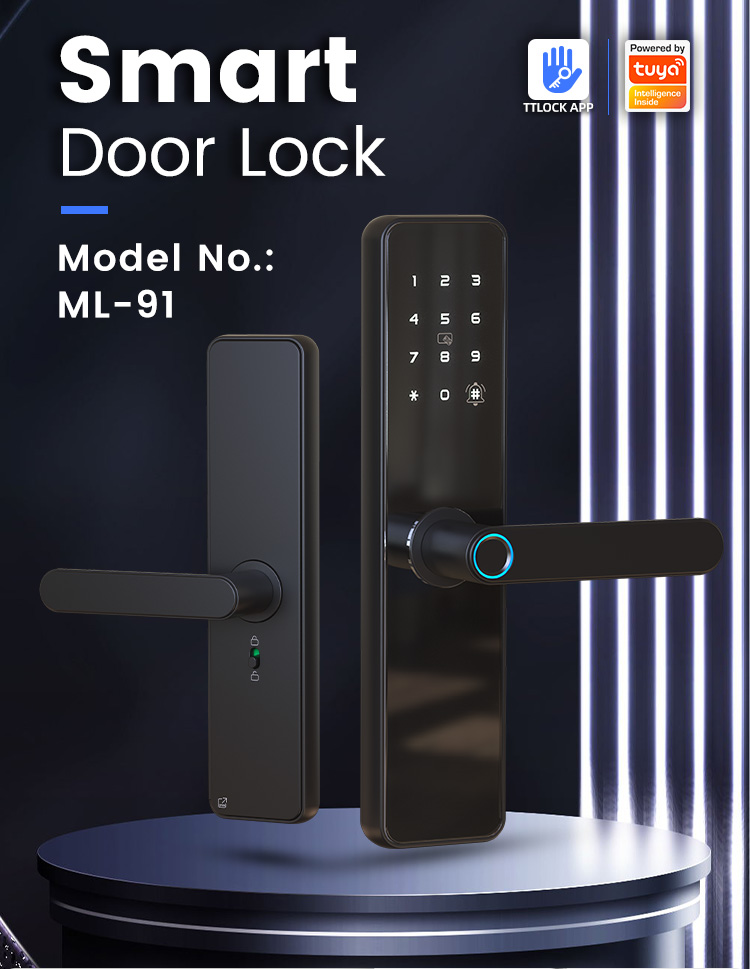
LOCSTAR ML-91 smart door lock, featuring multiple access methods.
A smart door lock combines mechanical components, electronic circuits, access credentials, and sometimes wireless communication or cloud-connected software. Each part can raise different compliance questions.
For importers and distributors, relevant documentation can help establish whether a product meets applicable market-entry requirements. For property developers and hotel operators, it can support technical reviews, project specifications, and procurement approval.
Certifications and test reports can also provide evidence that particular product characteristics have been assessed. Depending on the standard, this may involve electrical safety, radio-frequency performance, electromagnetic emissions, resistance to physical stress, or material restrictions.
It is important to understand that a certification mark is not a universal guarantee of security or product quality. Buyers should identify what a document actually evaluates, which model it covers, and whether it is legally required or simply useful evidence for a purchasing decision.
CE marking is one of the first compliance topics buyers encounter when sourcing electronic door locks for the European Economic Area. It indicates that the manufacturer declares the product conforms to the applicable European Union legislation covering that product.
For smart locks, the applicable legislation depends on the product's design and functions. A wireless smart lock may fall under the Radio Equipment Directive (RED). Other relevant requirements may include electromagnetic compatibility and, where the product falls within its scope, electrical safety requirements.
CE marking should not be treated as a single independent product test. Buyers should ask for the EU Declaration of Conformity and check which directives, regulations, and standards are listed for the exact model.
When reviewing CE-related documents, pay attention to:
For wireless products, the RED assessment may cover radio-spectrum use as well as relevant safety and electromagnetic compatibility requirements. Buyers should not assume that a CE document for a non-wireless version automatically covers a Wi-Fi or Bluetooth version.
For more information about the available product range, buyers can review LOCSTAR's smart door lock collection and request the compliance documents for the specific model under consideration.
FCC requirements are important when importing or selling electronic products in the United States. Smart locks with Bluetooth, Wi-Fi, or other radio-frequency functions may be subject to FCC equipment authorization requirements, depending on their radio design and operating characteristics.
Even products without intentional wireless transmission can be subject to applicable electromagnetic emissions requirements. The exact compliance route depends on the device classification and technical configuration.
When reviewing FCC documentation, buyers should check:
For products that use an approved radio module, buyers should still confirm whether the final host product meets the applicable integration and labeling conditions. A module's approval should not be interpreted as automatic approval of every finished smart lock.
For example, LOCSTAR's LS-8072-TThotel product page lists CE and FCC in its certificate information. Buyers sourcing this model for a US project should request the relevant supporting documents and confirm that the supplied configuration is covered.

LOCSTAR LS-8072 hotel smart lock, designed for card, password, app, and key access.
RoHS refers to restrictions on certain hazardous substances in electrical and electronic equipment. The EU RoHS Directive limits the use of specified substances in products within its scope.
For smart door locks, RoHS compliance is relevant to the electronic components and materials used in the finished product. Depending on the product construction, this can involve circuit boards, cables, connectors, solder, and other electrical or electronic parts.
Buyers should ask suppliers for a RoHS Declaration of Conformity or suitable supporting test documentation. The document should identify the product or components covered and make clear whether the assessment applies to the finished product or only selected materials.
Useful checks include:
RoHS is a material compliance requirement. It does not independently demonstrate that a smart lock is mechanically secure, resistant to forced entry, or protected against cyberattacks.
The Low Voltage Directive (LVD) is part of the European Union's electrical safety framework. Its voltage scope generally covers electrical equipment designed for use within specified voltage ranges: 50 to 1,000 volts AC and 75 to 1,500 volts DC.
This distinction matters because many residential smart locks operate using low-voltage batteries. A battery-powered lock may not fall within the LVD voltage scope simply because it contains electronic components. An external power supply or other electrical equipment supplied with the product may need to be assessed separately.
Buyers should therefore avoid assuming that every battery-powered smart lock must have an LVD certificate. Ask the supplier to identify the applicable legislation and explain which parts of the product or supplied system are covered.
For products that include adapters, external power supplies, or other mains-connected accessories, confirm that the relevant electrical safety requirements have been addressed for the complete supply configuration.
A smart lock can meet relevant electronic compliance requirements and still be unsuitable for a particular door or building application. Mechanical performance is a separate consideration.
Depending on the destination market and product type, buyers may need to review standards for lock strength, durability, operation, resistance to attack, and compatibility with the door assembly.
Examples of standards that may be relevant include:
These standards are not interchangeable. A hotel lock, residential deadbolt, electric strike, and access-control system may fall under different product classifications and test requirements.
For European projects, EN 14846 is particularly relevant to electromechanically operated locks and striking plates. It addresses areas such as strength, security, durability, and function of electrical and electronic components. Buyers should confirm whether the standard applies to the exact lock type being specified.
When selecting a lock for a hotel or commercial property, it is also important to verify the mortise, door thickness, installation method, and compatibility with the existing door hardware.
For hotel applications, LOCSTAR's RFID hotel lock range provides product options that buyers can evaluate alongside their project-specific mechanical and compliance requirements.
ISO 9001 is a quality management system standard. It relates to how an organization manages processes, responsibilities, documentation, customer requirements, and continual improvement.
For a smart lock buyer, an ISO 9001 certificate can provide useful information about a manufacturer's quality management system. However, it is not a product safety certificate and does not prove that every smart lock made by the company has passed a particular performance test.
When checking an ISO 9001 certificate, verify:
Other management-system certifications, such as ISO 14001 for environmental management or ISO 45001 for occupational health and safety, may also be relevant when evaluating a supplier's broader operations. They should not be confused with product-level approvals.
Smart locks increasingly use Bluetooth, Wi-Fi, RFID, Z-Wave, or other communication technologies. These functions create additional compliance questions beyond those associated with a traditional mechanical lock.
For radio-enabled products, buyers should verify the relevant radio-frequency requirements in the destination market. They should also confirm that the tested radio configuration matches the product being supplied, including the module, antenna, and supported frequency bands.
Cybersecurity is another important part of smart lock evaluation. A lock connected to an app, gateway, or cloud platform may process access credentials, user information, and entry records. Buyers should ask how the product handles authentication, firmware updates, user permissions, data transmission, and security vulnerability management.
ETSI EN 303 645 is a cybersecurity standard for consumer Internet of Things devices and can be a useful reference when evaluating connected smart products. It should not be described as a universal mandatory certification for every smart lock. Its applicability depends on the product, market, and procurement requirements.
For a connected smart lock, ask the supplier:
These questions are particularly important for apartment buildings, rental properties, hotels, and other environments where access permissions change frequently.
Not every smart lock is installed in the same environment. A lock used on an indoor apartment door has different exposure conditions from one installed on an exterior entrance exposed to rain, dust, or temperature changes.
An IP rating classifies the degree of protection provided by an enclosure against the ingress of solid objects and water under specified test conditions. It does not automatically prove that a lock is suitable for every outdoor environment.
Before choosing a product for an exposed entrance, check:
Do not assume that a smart lock is waterproof simply because it is advertised as suitable for outdoor use. Request the test report and confirm the test conditions before specifying it for a demanding environment.
The following table is a practical starting point for international buyers. It is not a complete legal checklist. The applicable requirements must be confirmed for the product category, technical configuration, and destination market.
| Market or application | Documents or standards to review | What to verify |
|---|---|---|
| European Union | CE marking, EU Declaration of Conformity, RED where applicable, RoHS, relevant mechanical standards | Applicable legislation, model coverage, radio functions, and test scope |
| United States | FCC compliance or equipment authorization where applicable, relevant UL or ANSI/BHMA standards | Radio configuration, product classification, and installation requirements |
| United Kingdom | Applicable UK product legislation and conformity documentation | Current requirements for Great Britain or Northern Ireland and the specific product |
| Saudi Arabia and other Gulf markets | Applicable national conformity and import requirements, which may include SASO-related documentation | Product category, customs requirements, and current market rules |
| Other international markets | Local electrical, radio, environmental, and building-hardware requirements | Importer obligations and destination-country regulations |
For hotel and apartment projects, buyers should also check whether the lock must meet project-specific fire-door, emergency-exit, accessibility, or building-code requirements. These requirements may apply to the complete door assembly or access-control installation rather than to the electronic lock alone.
Receiving a PDF certificate from a supplier is only the first step. Buyers should review the document and, where possible, verify it with the issuing organization or relevant certification database.
Use this checklist during supplier evaluation:
One common purchasing mistake is accepting a certificate for a similar-looking model without checking the model number and technical configuration. Even small changes to a radio module, power adapter, circuit board, or enclosure may affect the compliance assessment.
For this reason, buyers should make the approved model and its compliance documents part of the purchase specification and supplier agreement.
LOCSTAR provides electronic door lock products for residential, hotel, and access-control applications. Its product pages publish model-specific technical information, including unlocking methods, materials, and listed certifications.
For example, the LOCSTAR ML-91 smart door lock product page lists CE, RoHS, FCC, and LVD in its certificate information. The LS-8072-TThotel page lists CE and FCC. These published details can help buyers identify which documents to request when evaluating a particular model.
They should not be interpreted as a statement that every LOCSTAR product carries the same certifications. The relevant documents and their coverage should be confirmed for the exact model, product revision, and destination market.
Buyers can also review the LOCSTAR product certificate page for the company's published certification information.
For residential applications, the LOCSTAR ML-91 smart door lock is one model buyers can examine when comparing wireless access functions and listed compliance information.
For hotel projects, the LOCSTAR LS-8072-TThotel product page provides details about its card, password, app, and mechanical-key access options, together with its published CE and FCC information.
Certification review should be part of a wider supplier evaluation. Before confirming a bulk order, ask the manufacturer for clear answers to the following questions:
These questions help buyers distinguish between a supplier that simply lists certification logos and one that can provide traceable documentation for the products being purchased.
What certifications should I check when buying a smart door lock?
Common documents and standards to review may include CE-related conformity documentation, FCC compliance where applicable, RoHS, electrical safety requirements, and relevant mechanical lock standards. The exact requirements depend on the product design and destination market.
Is CE certification mandatory for smart locks sold in Europe?
CE marking is required for products covered by applicable EU harmonization legislation. The manufacturer must identify the legislation that applies to the specific smart lock and prepare the required conformity documentation. Buyers should request the EU Declaration of Conformity for the exact model.
Do smart door locks need FCC certification in the United States?
Smart locks with radio transmitters may be subject to FCC equipment authorization requirements. Other electronic products may be subject to applicable emissions rules. The correct compliance route depends on the device's radio functions and technical classification.
What is the difference between CE and RoHS?
CE marking relates to conformity with applicable EU product legislation. RoHS restricts the use of specified hazardous substances in electrical and electronic equipment within its scope. They address different compliance requirements.
Does every battery-powered smart lock need LVD certification?
No. The LVD applies to electrical equipment within specified voltage ranges. Many battery-powered smart locks operate below those ranges. However, an external power supply or included electrical accessory may need a separate assessment.
Does an ISO 9001 certificate prove that a smart lock is safe?
No. ISO 9001 concerns an organization's quality management system. It does not replace product-specific safety, radio, environmental, or mechanical performance assessments.
Are CE and FCC certificates valid for every model from the same manufacturer?
No. Certification and test documentation have defined scopes. Buyers should verify the exact model, hardware configuration, radio module, accessories, and certificate coverage before placing an order.
What mechanical standards may apply to electronic door locks?
Depending on the product and market, relevant standards may include EN 14846 for electromechanically operated locks, EN 12209 for mechanical locks and latches, and applicable ANSI/BHMA or UL standards in the United States.
Where can I check LOCSTAR smart lock certifications?
Buyers can review the LOCSTAR product certificate page and the technical information published on individual product pages. For procurement, request the latest documents covering the exact model and destination market.
What documents should I request before importing smart door locks?
Depending on the market and product, request the applicable Declaration of Conformity, certificates, test reports, FCC records where relevant, RoHS documentation, technical specifications, and product labeling information. Confirm any additional local import or installation requirements with the responsible authorities or compliance specialist.
Certifications should be reviewed before a smart lock order is finalized, not after the products arrive at the destination port. The right documents help buyers assess market suitability, identify potential compliance gaps, and reduce avoidable procurement risks.
Start by identifying the destination market and intended installation. Then match the product's wireless functions, power configuration, mechanical design, and accessories with the relevant requirements. Finally, verify that the certificates and test reports cover the exact model being purchased.
LOCSTAR provides a range of smart door locks and hotel locking products for international customers. If you are sourcing electronic locks for a distribution business, hotel, apartment development, or access-control project, share your target market and product requirements with the LOCSTAR team.
Visit the LOCSTAR contact page to discuss product specifications and request the compliance documents relevant to your project.
 en
 es
 ar
 lt
 中文